

Dr. Vidushi (Sustainability Enthusiast)
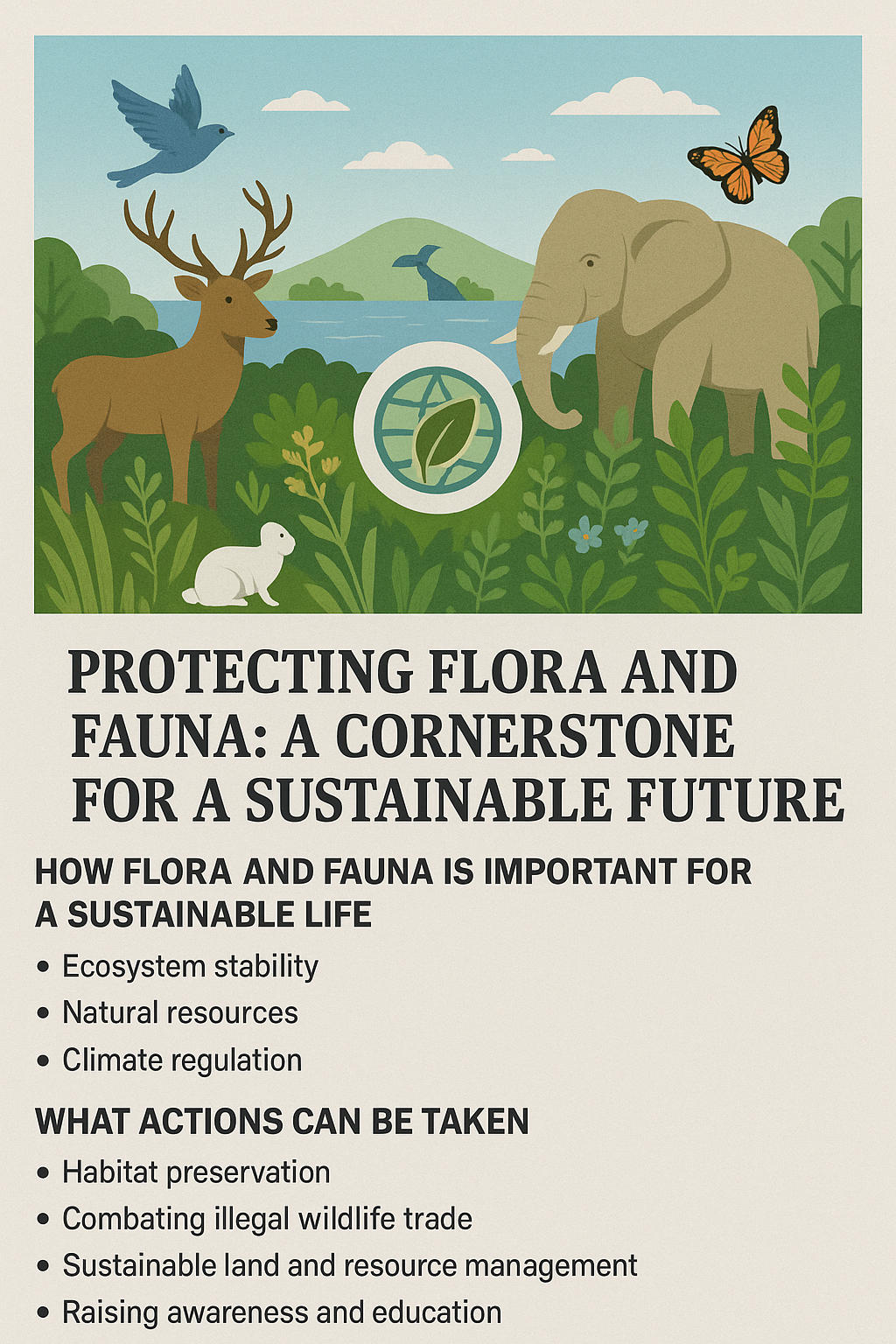
In the face of rising climate challenges, the importance of protecting our planet’s rich biodiversity has never been clearer. From the smallest wildflower to the largest marine mammal, every species plays a crucial role in maintaining the delicate balance of life on Earth. Safeguarding our flora and fauna is not just an act of conservation — it is a vital investment in a sustainable and resilient future.
Nature’s Invisible Infrastructure
Plants and animals form the invisible infrastructure that sustains human life. Forests, often called the lungs of the Earth, absorb carbon dioxide and release the oxygen we breathe. Wetlands filter water, coral reefs protect coastlines, and diverse ecosystems contribute to soil fertility, ensuring food security for millions. Without healthy ecosystems, the services we often take for granted — clean air, fresh water, and fertile land — would quickly diminish.
Moreover, many life-saving medicines are derived from plants and animals. From antibiotics to cancer treatments, nature’s pharmacy has been an irreplaceable ally in human health. Protecting biodiversity preserves the genetic library from which future medical discoveries will emerge.
Enhancing Climate Resilience
In a warming world, biodiversity acts as a natural buffer against the impacts of climate change. Mangrove forests, for instance, shield coastal communities from storm surges. Diverse agricultural systems are more resilient to pests, diseases, and extreme weather compared to monocultures. By preserving a wide range of species and ecosystems, we build a more adaptable, stable environment — one that can better withstand and recover from climate shocks.
Supporting Sustainable Economies
Biodiversity also underpins industries such as agriculture, forestry, fisheries, and tourism. A thriving natural world supports millions of jobs globally. Ecotourism, for example, depends on pristine landscapes and abundant wildlife, contributing significantly to local and national economies.
However, unsustainable exploitation of natural resources not only endangers species but also threatens long-term economic stability. Sustainable practices — from responsible farming to ethical tourism — demonstrate that economic development and environmental stewardship can go hand in hand.
A Moral and Ethical Imperative
Beyond economic and survival arguments, there lies a profound ethical responsibility to protect the other species with whom we share this planet. Every plant, animal, and ecosystem has intrinsic value, deserving of respect and protection. Preserving biodiversity honors our role as stewards of the Earth and ensures that future generations inherit a world rich in wonder and life.
Protecting flora and fauna requires coordinated global action, robust local initiatives, and meaningful individual efforts. Governments must strengthen environmental policies, expand protected areas, and combat illegal wildlife trade. Businesses need to embrace sustainable practices that respect ecological limits. Citizens can contribute by supporting conservation efforts, making eco-friendly choices, and raising awareness about the importance of biodiversity.
The path to a sustainable future is deeply intertwined with the fate of the natural world. By protecting the vibrant tapestry of life around us, we not only safeguard the planet’s beauty and diversity but also secure a livable world for ourselves and generations to come.
It is not just about saving nature. It is about saving ourselves.

