

Dr. Vidushi (Sustainability Enthusiast)
In a world racing against time to curb climate change, reduce pollution, and secure clean energy, one small act by every individual can power a big change — waste segregation.
We often think of electricity generation in terms of coal, solar panels, or wind farms. But did you know your kitchen scraps, plastic wrappers, and old newspapers could help power your home — if disposed of correctly?
Waste to Energy: A Clean Power Path
Waste-to-energy (WTE) technologies convert non-recyclable waste materials into usable heat, electricity, or fuel. These systems rely on segregated waste — that is, waste separated into categories like organic, recyclable, and non-recyclable — to function efficiently.
a) Organic waste (like food leftovers and garden trimmings) can be processed into biogas via anaerobic digestion.
b) Non-recyclable dry waste can be incinerated to generate electricity.
c) Recyclables (plastics, metals, paper) can be sent for reprocessing, reducing the need for virgin resources and the energy that goes into producing them.
Poorly segregated waste, by contrast, leads to landfills emitting harmful methane gas, contaminating soil, and squandering a key opportunity for energy recovery.
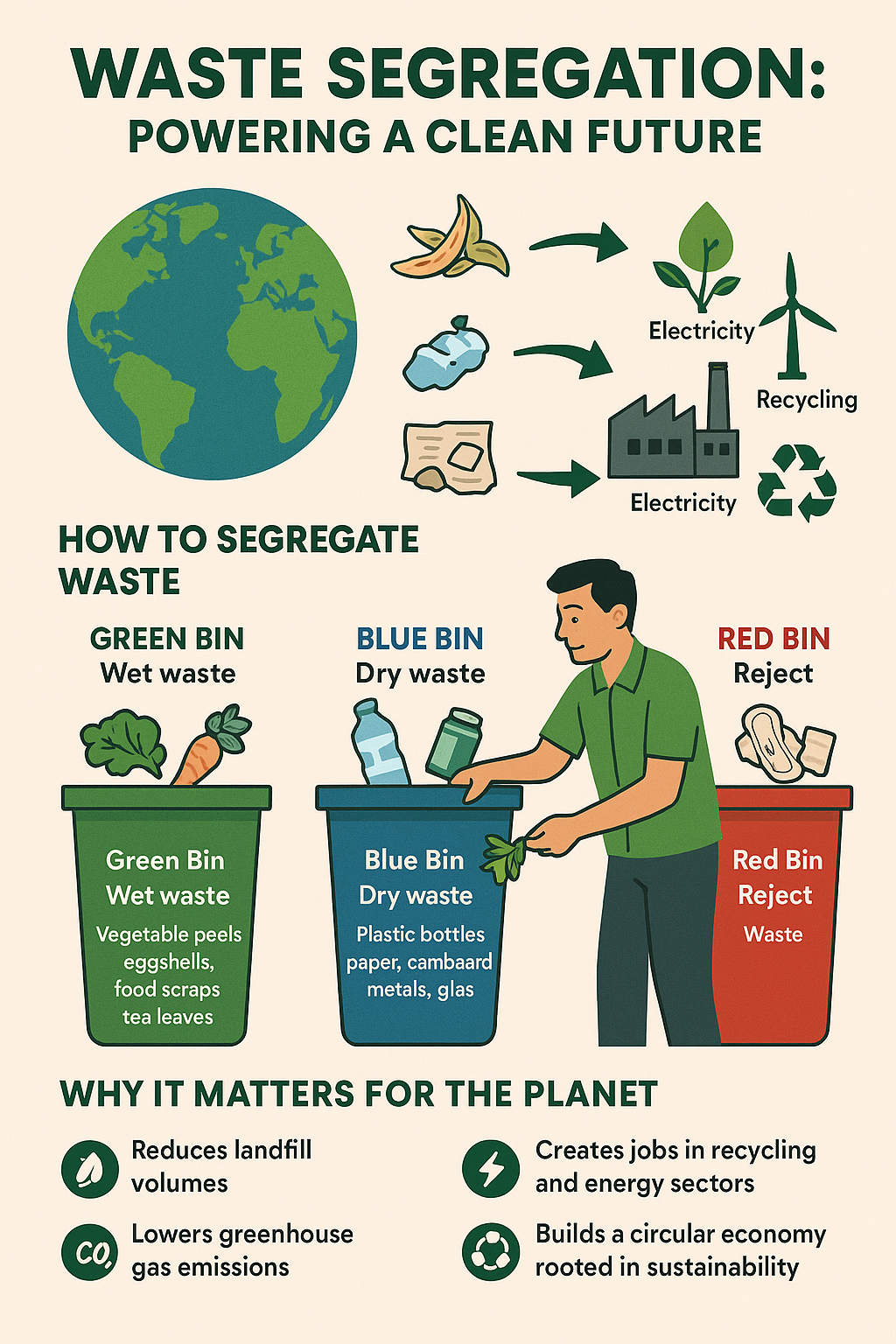
How a Common Man Can Segregate Waste
Here’s the good news: waste segregation doesn’t need high-tech gadgets or government schemes to start. It begins at home — with three simple bins.
a) Green Bin – Wet Waste
Includes: vegetable peels, eggshells, food scraps, tea leaves
Tip: Compost at home or hand over to municipal organic waste collectors
b) Blue Bin – Dry Waste
Includes: plastic bottles, paper, cardboard, metals, glass
Tip: Rinse before disposal; keep dry to avoid contamination
c) Red Bin – Reject Waste
Includes: sanitary pads, soiled tissue, diapers, broken ceramics
Tip: These often go to landfills but can be minimized by rethinking usage habits
This simple habit, when adopted by millions, can radically improve the quality of municipal solid waste and boost the efficiency of WTE plants, biogas units, and recycling facilities.
Why It Matters for the Planet
India alone generates over 160,000 tonnes of solid waste every day, and much of it remains unsegregated. When recyclable plastics mix with food waste, they rot. When toxic waste seeps into organic compost, it renders it unusable. In short, improper waste disposal kills value.
But when done right, waste segregation:
a) Reduces landfill volumes
b) Lowers greenhouse gas emissions
c) Enables cleaner energy generation
d) Creates jobs in recycling and energy sectors
e) Builds a circular economy rooted in sustainability
Sustainability isn’t just about big policies or billion-dollar clean energy deals. It’s about collective consciousness. If every household, school, restaurant, and office commits to responsible waste segregation, we can transform waste from a liability into a clean, renewable resource.
So the next time you toss out your garbage, pause for a moment. That banana peel? It could be tomorrow’s electricity. That soda can? Tomorrow’s railway track.
Waste isn’t the end. With segregation, it’s the beginning.