Dr. Vidushi (Sustainability Enthusiast)
Did you know that every time you take a shower, wash vegetables, or do laundry, you’re sending litres of reusable water straight down the drain?
In a world facing rising water shortages, this everyday habit is something we can—and must—change. It’s time we start reusing household wastewater to reduce our water footprint, cut down bills, and take a big step toward a more sustainable lifestyle.
What Kind of Water Can Be Reused?
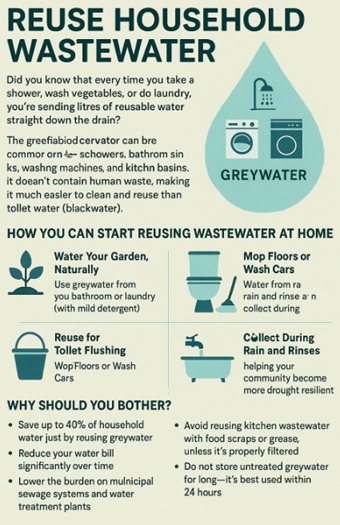
The good news is: not all wastewater is dirty. A large portion of it—called greywater—comes from our showers, bathroom sinks, washing machines, and kitchen basins. It doesn’t contain human waste, making it much easier to clean and reuse than toilet water (blackwater).
How You Can Start Reusing Wastewater at Home
a) Water Your Garden, Naturally
Use greywater from your bathroom or laundry (with mild detergent) to water your plants. A simple DIY filter system or bucket collection method can do the trick. Your plants won’t mind, and your water bill will thank you.
b) Reuse for Toilet Flushing
Why flush clean water when treated greywater can do the job just as well? Many homes are now using basic plumbing changes to redirect greywater to toilet tanks.
c) Mop Floors or Wash Cars
Water from rinsing fruits and vegetables can easily be collected in a container and used for cleaning your home or washing your vehicle.
d) Collect During Rain and Rinses
Place a bucket in your bathroom to collect running water while waiting for it to heat up, or catch the rinse cycle water from your washing machine for reuse.
Why Should You Bother?
a) Save up to 40% of household water just by reusing greywater
b) Reduce your water bill significantly over time
c) Lower the burden on municipal sewage systems and water treatment plants
d) Contribute to a circular water system, helping your community become more drought-resilient
A Few Safety Tips
a) Use eco-friendly soaps and detergents to avoid harming plants or soil.
b) Avoid reusing kitchen wastewater with food scraps or grease, unless it’s properly filtered.
c) Do not store untreated greywater for long—it’s best used within 24 hours.
Water is not infinite—and treating every drop like it’s disposable is no longer an option. With a few simple changes at home, you can turn waste into a valuable resource.
So next time you’re doing laundry or brushing your teeth, ask yourself: Where is this water going? With the right awareness and a little effort, it could go toward greening your garden, flushing your toilet, or cleaning your floors—not just down the drain.